An Complete Handbook to Picking & Pairing High-Performance Angle Steering Kits alongside Perfectly Matched Suspension Hardware
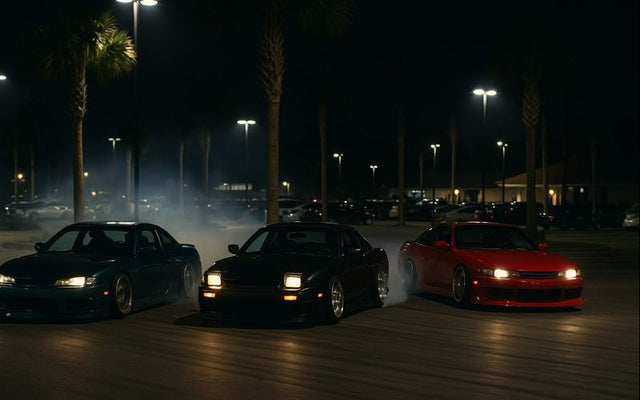
Inside the intensely competitive world of today's pro-level sliding, success is not merely solely a result of raw engine power or driver courage. Instead, it is now a complex discipline which demands a painstaking fusion of picking a proven car, outfitting it with the most precise drift-spec parts, and, most essentially, comprehending its real-time characteristics on the circuit through sophisticated suspension tuning applications. This definitive handbook acts as your blueprint from the initial idea of a competition vehicle through to the last telemetry-optimized tweaks that transform a powerful vehicle into a repeatable podium finisher. We will thoroughly explore the precise engineering of vehicle alignment optimization, demonstrating how a advanced drift tuning app like precise measurement hardware eliminates assumptions and delivers unparalleled clarity into your car's true dynamics.
The bedrock of any exceptional drift car is, indisputably, the platform itself. Certain platforms have attained iconic standing within the worldwide drifting culture due to their natural balance, durable build quality, and the vast availability of performance components available. Choosing the right starting point is the first and most important choice a builder will make. To illustrate, the BMW's E36 3 Series is commonly accepted as among the best overall drift cars of the modern era. Its near-perfect evenly distributed mass, combined with a driven rear axle configuration and robust inline-six motors, creates a car that is both accessible for beginners and extremely effective in the hands of a professional competitor. The next step of this concept, the BMW E46, refines these attributes with a more developed structure, wider stance for enhanced confidence, and still more turning capability directly from the factory. A distinct formidable option in the pro arena is the C6 generation Corvette.
This American track weapon introduces a particular set of strengths to the sideways discipline, including a lightweight alloy structure, a transaxle-style gearbox and differential unit that contributes to an excellent front-to-rear mass ratio, and the tremendous low-end power of a large-displacement GM LS engine. This blend renders it an absolute force on track, able of initiating and maintaining continuous slides with seemingly minimal use of throttle. For builders looking for outstanding value, the Nissan 350Z stands out as a prime example. It arrives from the manufacturer with a robust platform, a decent OEM LSD, and the free-revving VQ series engine that provides plenty of performance for practicing and advancing in the activity. Its successor, the Nissan 370Z, offers more improvements in structural rigidity, handling precision, and peak engine output, cementing its position as a popular selection among competitive pilots. Further historic vehicles that warrant attention are the lightweight rotary-powered Mazda FC RX-7, the ubiquitous Nissan S13 240SX, the torque-rich Ford Mustang SN95, the modern BMW E90, and the small yet unbelievably playful and teachable Mazda Miata. Each of these platforms provides a different palette of attributes, complexities, and possibilities, but they all possess the basic components essential to serve as a serious drift machine.
However, choosing the correct car is merely the beginning. To unlock the complete performance of every of these cars, substantial modifications to the steering and suspension systems are utterly essential. This is where the realm of specialist aftermarket components becomes critical view. The single most game-changing improvement for a serious drift car is the installation of a drift-spec steering angle kit. These advanced kits, for example those engineered by industry leaders like specialist manufacturers, are engineered to radically expand the car's maximum lock-to-lock rotation. A factory street car is highly restricted in how far its front wheels can pivot, a engineering limitation for public road use. In oversteer driving, however, aggressive opposite lock is constantly necessary to catch and hold a slide. An steering kit substitutes the OEM steering knuckles, tie rods, and sometimes A-arms with pieces that permit the front tires to reach angles in excess of 70 or even 80 degrees, as opposed to a normal stock setting of around 40 to 50 degrees.
This tremendously greater lock provides the operator with dramatically enhanced authority during a drift, making it much simpler to start a oversteer moment, hold it through a sweeping bend, and transition smoothly from one direction to another. The contrast in controllability is absolutely transformative. Coupled with a appropriately chosen modification is the every bit as vital enhancement to the vehicle's spring and damper setup. Off-the-shelf or including expensive street dampers are simply not engineered for the particular and brutal requirements of competitive oversteer. A dedicated pair of suspension units is paramount. These specific suspension components feature specific damping rates and spring strength that are optimized for the rapid mass transition that is inherent of drifting. When a operator starts a drift, the chassis's weight is thrown violently to the outside of the bend. Correct drift-spec suspension control this shift in a consistent manner, permitting the chassis to find its balance rapidly and offering the pilot clear feel through the steering wheel and driver's seat. They also enable precise tuning of ride height, rebound and compression stiffness, and cross-weight, which are all integral aspects of optimizing the vehicle's dynamics to a specific circuit or competition technique. As a system, a high-quality angle modification system and a properly selected pair of drift-spec adjustable dampers are the absolute physical cornerstone upon which all future tuning is built.
Once the essential parts is fitted, the following essential phase in the build is the precise setting of the vehicle's suspension geometry. This is the domain of chassis dynamics adjustment, a procedure that can seem overwhelmingly complex to the beginner but is, in reality, the key to converting a assembly of capable pieces into a harmonious and predictable whole. The most debated parameter of tuning for oversteer is undoubtedly camber angle. Wheel camber is the inclination of the wheel relative to the vertical axis when observed from the front-on of the car. If the upper part of the wheel is angled towards the chassis, this is called negative camber. For oversteer driving, an inward tilt on the front axle wheels is generally used and is seen as necessary. The purpose is fundamentally tied to tire contact.
When a vehicle is cornering at extreme angles, the frame tilts towards the outer of the turn. This lean makes the outside steering tire to diminish its ideal footprint with the track surface. By introducing inward lean, the tire is pre-leaned to account for this lean. As the chassis tilts into the turn, the outside front tire becomes more upright with the road surface, increasing its suspension engineering traction at the critical moment when it is most required for directional command. Commonly, front camber settings for a competition drift machine vary from approximately -3 degrees to as high as -5 degrees or even beyond, depending on the parameters of the vehicle geometry, rubber choice, and operator style. The rear tires also use negative camber, but the settings are typically more modest and subtler than the front. Excessive inward lean at the rear can cause the vehicle to overly tail-happy and challenging to predict on power use, as it diminishes the usable contact patch of the powered wheels during forward power delivery. Hence, rear axle adjustments are frequently in the ballpark of -1 degree to -3 degrees, achieving a careful balance between giving sufficient lateral bite to aid in starting and maintaining the slide while still preserving effective traction for power-down the corner. alignment is merely one component of the more complex suspension geometry equation, which additionally encompasses toe, caster, and bump steer correction.
Toe setting is the orientation of the tires when viewed from a bird's-eye view. Toe-in means the leading edges of the wheels are nearer together than the rear edges, while negative toe means the reverse. For drifting, a modest amount of front negative toe is frequently run to quicken the initial handling feel, making the vehicle feel more responsive and willing to begin a drift. Rear axle toe is generally set to zero or a extremely slight amount of inward toe to foster predictability under throttle. Caster is the longitudinal or aft angle of the steering axis when observed from the side-on of the chassis. Increased caster enhances feedback and high-speed solidity, and it also adds to inward lean gain during turning, which is highly useful. Adjusting these values is a complex dance where a adjustment to a single setting can and often will affect the remaining parameters. The old-school process for tuning a car's alignment for sliding has historically been a tedious affair of trial and error. A pilot or crew would introduce a change based on experience, test the chassis on track, depend on the driver's subjective sensation and impressions, and then introduce another adjustment. This loop would continue time after time until the chassis felt "good" or the available track session was exhausted. This system is not just exceptionally wasteful in terms of time and resources, but it is also inherently inaccurate.
Driver perception is a infamously subjective measurement tool, affected by many elements such as exhaustion, evolving track grip levels, weather, and merely the focus of the operator on that given run. What feels "tail-happy" on one run might feel "understeery" on the following run, resulting in conflicting information and frustrating adjustments. This age-old challenge in car suspension tuning is precisely where state-of-the-art telemetry systems has made its mark to transform the methodology.
The rise and adoption of advanced drift telemetry software has ushered in a radically different paradigm for engineering and optimizing competitive sliding vehicles. This new generation of tools, exemplified by cutting-edge solutions like modern telemetry hardware, function by actively capturing the live physical performance of the car as it is being driven on the course. In contrast to relying on driver impression, these tools collect objective data on key factors such as suspension travel, wheel speed, lateral and longitudinal g-forces, lock position, and throttle and brake input. This acquired information flow is then analyzed by powerful software that can plot and analyze the data in a clear manner. For the first time ever, engineers and crews can see specifically what the vehicle is doing at each point of a slide. This capability revolutionizes the entire alignment optimization procedure. Think about the particular challenge of dialing in the front camber for a particular vehicle. As an alternative to introducing a modification from -3 degrees to -3.5 degrees and then running several runs to try and "sense" a difference, a suspension tuning tool can provide immediate and definitive information. The application can display graphically how the tire's loading is acting during the most important stages of a drift: initiation, holding the angle, and changing direction. It can demonstrate if the current angle is enabling the steering tire to keep maximum grip or if the compound is working inefficiently on its external shoulder.
The software can after analysis suggest fact-based advice for modification. Perhaps the information reveals that the outside front tire is even stressing its edge at -3.5 degrees of camber, indicating that an increase to negative camber, say -4 degrees, might be beneficial. Conversely, the data might reveal that the tread is failing to reaching optimal operating temp or that the inner shoulder is degrading unevenly, which could indicate that there is excessive negative camber and a slight lessening back to -3.2 degrees would be more ideal. This degree of precision and practical analysis was literally unattainable in the era of exclusively manual setup.
The impact of employing a advanced suspension tuning tool extends much further than just optimizing alignment. It serves as an invaluable coilover setup tips that is specific to your specific chassis. When fine-tuning the rebound and compression settings on your coilovers, rather than depending on general tips or copying another car's settings, you can use the software to observe how the vehicle is reacting in response to your changes. The software can display the suspension travel path over a lap, showing if the dampers are managing the weight transfer properly or if they are allowing the chassis to become unsettled too much after a flick. It can help in identifying issues like hitting the bump stops or topping out, enabling you to introduce educated choices to preload settings, damping values, or ride height. This process applies equally to the complex art of suspension geometry optimization. Beyond camber angle, the tool can provide insight into how changes to toe and caster angle are affecting the vehicle's stability during specific phases of a drift. For example, it can help you to determine the best amount of front axle toe-out for your particular steering setup and driving technique by measuring the response time of initial response and the predictability of the vehicle at lock steering angle. This turns the tool an incredibly powerful drift suspension tuning guide that is constantly updated by the live performance of your own vehicle on the tarmac. It elevates the entire process from a subjective skill into a scientific optimization exercise.
Moreover, the application of a tool like modern telemetry is not at all suspension engineering restricted to expert tuners with extensive funding. For the grassroots driver, it functions as an powerful force multiplier. It effectively offers the driver with the analysis of a expert dynamics engineer without requiring the typical overhead. It drastically shortens the learning curve by providing definitive directions to problems that would normally take years of experience to answer. A builder can understand how their particular vehicle reacts to specific adjustments, gaining a more profound understanding of car control in the process. It additionally democratizes advanced chassis dynamics concepts, allowing all drivers with the drive to refine their car to accomplish it in a systematic and effective fashion. This is notably important in a activity like sliding, where tuning knowledge has historically been a highly secretive asset among elite crews. Now, that power can be in the garage of any motivated builder.
In conclusion, the process to constructing and tuning the ideal competitive sliding vehicle is a multi-stage endeavor that seamlessly integrates proven hardware knowledge with cutting-edge telemetry solutions. It commences with the strategic selection of a proven platform, then enhanced by the integration of essential drift-spec parts like maximum-angle angle modification systems and expertly valved performance adjustable dampers. The journey then progresses into the detailed realm of car suspension tuning, where parameters like camber, toe, and caster are meticulously adjusted to match the car's new capabilities and the operator's individual style. Finally, and what genuinely differentiates the today's methodology from the old ways, is the use of a sophisticated vehicle dynamics tool. This system eliminates the guesswork and inefficiency of purely seat-of-the-pants setup by delivering objective, real-time data on how the car is really performing. It functions as an suspension engineering unparalleled suspension tuning tool, a definitive drift suspension tuning guide, and a master performance analyzer. In unison, this complete approach guarantees that each and every element of the competition vehicle—from the selection of the car to the last adjustment on the suspension—is refined for ultimate performance on the circuit. It represents the full maturation of the art of oversteer driving, bridging physical car control with data-informed suspension engineering to create the perfect dominant vehicles attainable.